

The Chancellor promised "breathing space for today and hope for the future" for families in this year's Autumn Budget. But has it delivered for businesses across the region?
That was one of the questions raised at our post-Budget Breakfast Exchange event, held at The Ivy Bath, where local business owners and professionals came together to hear what the announcements could mean for them.
The panel was chaired by Anita Jaynes, Founder of The Business Exchange. Joining her were Richardson Swift's Director and Head of Tax, Calvin Healy, Samantha Skuse, Founder & Director of Synthesis Wealth Management and Sonia Green, Partner at Thrings, to discuss the impact on businesses, individuals and families.
There was some relief that the Budget hadn't brought any major tax surprises, but while the panel tried to remain optimistic, there were still concerns about what lies ahead for businesses already dealing with rising costs and economic uncertainty.
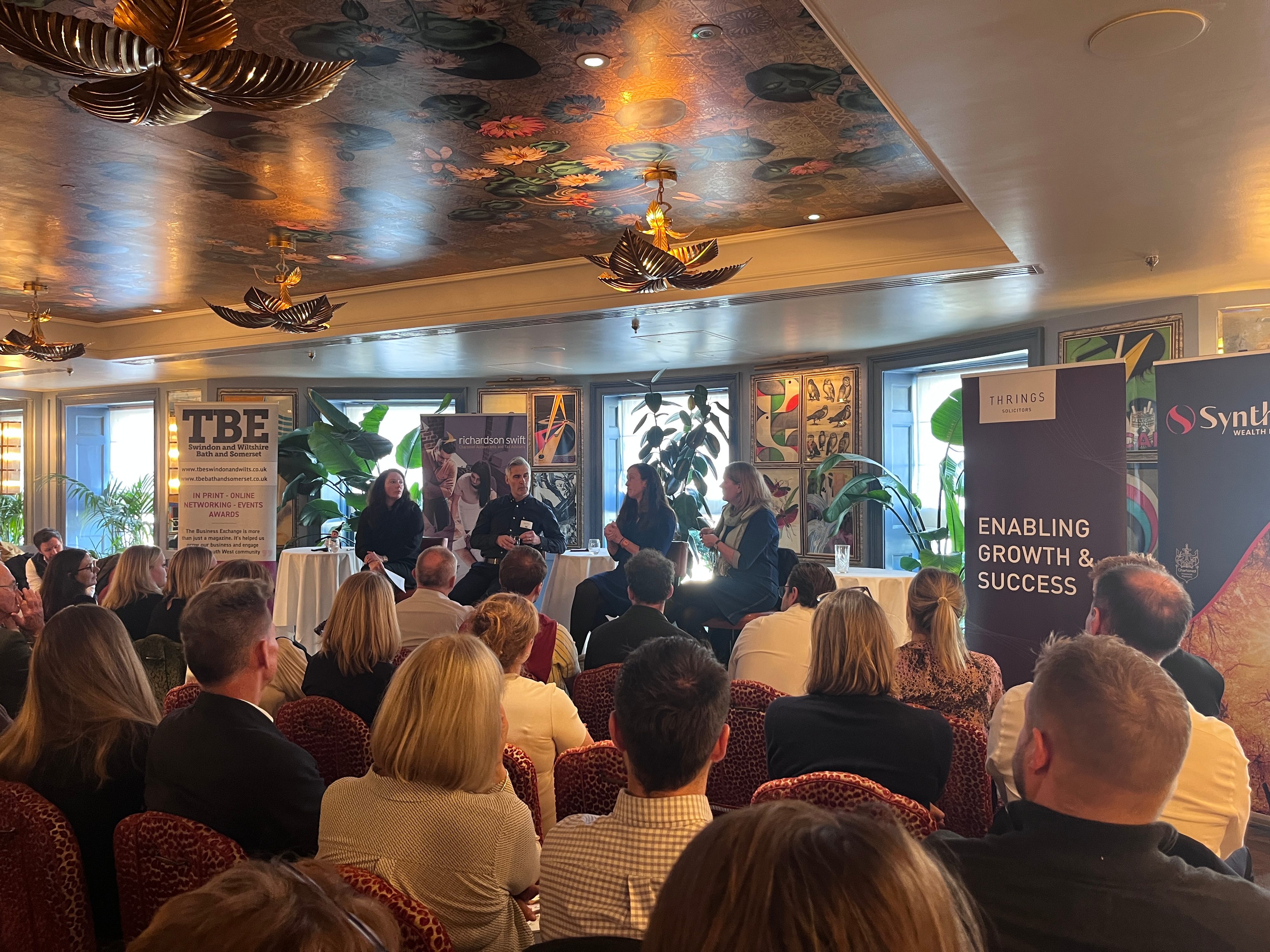
Here are some of the key takeaways from the discussion.
1. Rising Costs and the Challenge of Business Growth
For businesses in sectors such as hospitality, retail and manufacturing, the increase in the National Living Wage from April 2027 will add to costs that have already risen considerably in recent years.
The panel discussed how higher wages, employer costs and other overheads are eating into profits, particularly when businesses can't simply pass those increases on to their customers.
For Calvin, one of the biggest concerns is what this means for future growth.
"The key bit for me is retained profit, because that's the signal of how the business has grown and the funds available for investment."
If businesses are spending more just to keep running, there's less money left to invest in new equipment, people or expansion.
The Budget included further changes to business rates, offering some welcome relief for smaller businesses. However, Calvin pointed out that the benefits may not be felt equally. He used Milsom Street and Walcot Street in Bath as an example of how businesses in different parts of the same city could see very different outcomes, depending on their rateable values. Those with higher rateable values may still face significant bills despite the additional support.
2. Tax Pressures and Wider Economic Challenges
While there were no big increases to headline tax rates, that doesn't mean people won't end up paying more.
With personal tax thresholds remaining frozen, rising earnings could push more people into higher tax bands. There are also further challenges ahead for those receiving income from savings or property.
The panel also discussed the pressures facing the property market, with rising construction, labour and tax costs making developments less financially viable for some investors and housebuilders. There was also discussion about landlords choosing to leave the rental market, raising questions about what this could mean for the availability of rental properties in the future.
Calvin expressed concerns about the longer-term economic outlook and the Office for Budget Responsibility's forecasts for growth.
"The OBR was pretty dismal reading. We've had 10 years of, let's call it, no real growth, and they're not saying the next five years will be any better."
He also questioned how the Government would fund some of its future spending commitments, including defence. The feeling was that, even if this Budget didn't bring significant new tax increases, the money will have to come from somewhere eventually.
For businesses and individuals, it's another reason not to assume that their tax position will stay the same.
3. Planning Ahead for Business Succession
Changes to Business Asset Disposal Relief and the introduction of Founders' Relief from April 2027 led to an interesting discussion about business ownership and succession.
The panel raised an important point about planning for the future: it shouldn't begin when you're approaching retirement or thinking about selling your business. By then, some of your options may already be limited.
Business owners should be thinking about what they want their business to look like in five or ten years, what it might be worth and whether they eventually want to sell, pass it on to family or hand over to a management team.
The discussion also touched on inheritance tax and pensions, with Sonia and Samantha highlighting how recent changes are prompting families to think earlier about their finances and succession plans, including what they want to pass on to the next generation and what they might choose to enjoy during their lifetime.
These aren't always easy conversations, but leaving them until the last minute can make things considerably more difficult.
4. Cash Flow and the Changing Way We Pay Tax
One announcement Calvin was keen to highlight was the Government's confirmation that self-assessment taxpayers who currently make payments on account will move to smaller, more regular payments from April 2029.
For those used to making payments in January and July, this could mean quite a different approach to managing their tax bills.
Calvin spoke of the importance of understanding how the transition will work, particularly if taxpayers need to manage outstanding liabilities from the previous year alongside payments under the new arrangements.
Although the finer details are still to be confirmed, it's something business owners will need to factor into their future cash-flow planning.
5. The Importance of Having the Right Advice
With tax rules becoming increasingly complex and further changes on the horizon, there was a clear consensus among the panel about the importance of having professional advisers who work together and understand the bigger picture.
As Sonia explained "You won't have one professional adviser who can advise you on everything. You need to have a team around you, with professional advisers who can speak to each other for you."
The panel recognised that financial decisions are rarely just about numbers. Whether planning retirement, transferring a family business or responding to changing tax rules, there are often personal and emotional considerations too.
Having accountants, financial advisers and legal specialists working together can help individuals and business owners understand their options and make more informed decisions. But good advice isn't just about the technical side of things. Having someone you know and trust to turn to for guidance and reassurance during difficult or uncertain times can be just as valuable.
Looking Ahead…
There were some positives to take from the Budget, including additional funding through the British Business Bank and plans to make government procurement more accessible to smaller businesses. The question, however, is how much of this support will actually reach local SMEs.
Devolution also prompted an interesting discussion about what greater powers and funding for regional mayors could mean for Bath. While more local control over investment and business rates was welcomed, it remains to be seen whether smaller cities will benefit as much as their larger neighbours.
The conversation also turned to the future of British manufacturing, with rising costs and overseas competition continuing to present challenges. But there was a strong feeling that Bath has much to be proud of, from the engineering talent coming out of the University of Bath to the manufacturing businesses operating across the region.
Despite the challenges, there was a clear message. Businesses and individuals need to be thinking further ahead, rather than simply responding to changes as they happen.
As Calvin put it:
"You've got to start looking at the next 10 years, but you have to start planning now for where you want to get to."
At Richardson Swift, we work closely with our clients to help them understand what's changing, consider their options and plan for the future.
If you'd like to discuss how the Budget announcements could affect your business or individual finances, please get in touch with your usual Richardson Swift contact.